
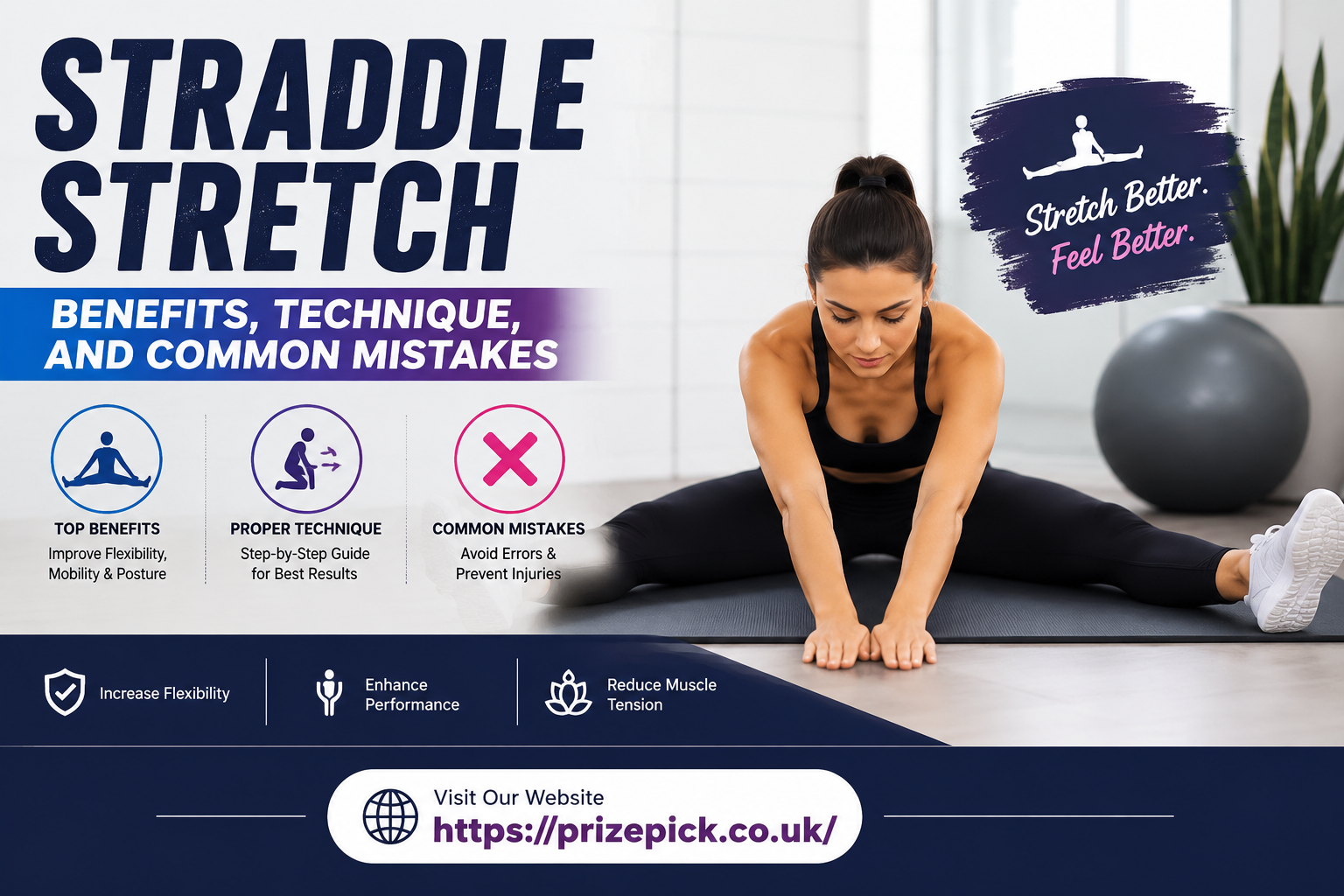
The Straddle Stretch is one of the most effective flexibility exercises for improving hip mobility, stretching the inner thighs, and increasing lower-body range of motion. Whether you’re a beginner looking to become more flexible, an athlete aiming to improve performance, or a dancer or gymnast working toward advanced movements, this stretch offers significant benefits when performed correctly.
Despite its popularity, many people perform the straddle stretch incorrectly, reducing its effectiveness or increasing the risk of discomfort and injury. Learning the proper technique can help you gain flexibility safely while protecting your muscles and joints.
What Is the Straddle Stretch?
The Straddle Stretch is a seated flexibility exercise where the legs are spread apart in a wide “V” shape while the upper body leans forward or remains upright. It primarily targets the:
- Inner thigh muscles (adductors)
- Hamstrings
- Hip flexors
- Lower back
- Groin muscles
It is commonly included in:
- Yoga routines
- Dance training
- Gymnastics
- Martial arts
- Cheerleading
- Athletic warm-ups and cool-downs
- General flexibility programs
Unlike many simple stretches, the Straddle Stretch develops flexibility across multiple muscle groups at once.
Benefits of the Straddle Stretch
Improves Hip Mobility
One of the greatest advantages of the straddle stretch is improved hip mobility. Flexible hips make everyday movements easier, including walking, squatting, climbing stairs, and bending down.
Better hip mobility also supports healthy movement patterns during sports and exercise.
Increases Flexibility
The stretch gradually lengthens muscles around the hips and legs.
Improved flexibility can help:
- Reach deeper yoga poses
- Perform athletic movements more efficiently
- Improve dance techniques
- Reduce muscle tightness
Strengthens Body Awareness
Holding the stretch with proper posture teaches body control and alignment. Over time, you’ll become more aware of muscle engagement and balance.
May Improve Posture
Tight hips and hamstrings often contribute to poor posture.
Regular stretching can help reduce tension around the pelvis, making it easier to sit and stand with proper alignment.
Supports Athletic Performance
Many sports require powerful lower-body movement.
Greater flexibility may contribute to:
- Better kicking mechanics
- Improved sprinting form
- Enhanced jumping ability
- Increased agility
May Reduce Muscle Tightness
People who spend long hours sitting often experience tight hips and inner thighs.
The straddle stretch helps restore normal movement and relieve stiffness after prolonged sitting.
Muscles Worked During the Straddle Stretch
| Primary Muscles | Secondary Muscles |
|---|---|
| Hip adductors | Lower back |
| Hamstrings | Glutes |
| Hip flexors | Calves |
| Groin muscles | Core stabilizers |
Understanding which muscles are involved helps you focus on proper form instead of forcing the stretch.
How to Perform the Straddle Stretch Correctly
Follow these simple steps:
Step 1: Sit Comfortably
Sit on the floor with both legs extended.
Step 2: Open Your Legs
Slowly spread your legs into a comfortable “V” position.
Do not force maximum width.
Step 3: Straighten Your Back
Sit tall with:
- Chest lifted
- Shoulders relaxed
- Spine neutral
Avoid rounding your back.
Step 4: Engage Your Core
Lightly tighten your abdominal muscles to stabilize your torso.
Step 5: Lean Forward
Hinge from your hips—not your waist.
Move slowly until you feel a gentle stretch.
Step 6: Hold the Position
Stay in the stretch for:
- Beginners: 20–30 seconds
- Intermediate: 30–45 seconds
- Advanced: 45–60 seconds
Repeat two or three times.
Common Mistakes to Avoid
Rounding the Back
Many people bend from the spine instead of the hips.
This reduces the stretch and may place unnecessary stress on the lower back.
Forcing the Stretch
Pain is not a sign of progress.
Stretch only until you feel mild tension.
Locking the Knees
Keep the knees relaxed rather than forcing them completely straight.
Skipping the Warm-Up
Cold muscles are less flexible.
Always spend 5–10 minutes warming up before stretching.
Examples include:
- Light jogging
- Walking
- Jump rope
- Dynamic leg swings
Holding Your Breath
Steady breathing helps muscles relax.
Take slow, controlled breaths throughout the stretch.
Beginner-Friendly Modifications
If you’re new to flexibility training, try these adjustments:
Sit on a Cushion
Raising your hips helps maintain a straighter back.
Narrow Your Leg Position
A smaller straddle still provides excellent benefits.
Bend the Knees Slightly
This reduces tension on tight hamstrings.
Use Yoga Blocks
Rest your hands on blocks instead of reaching the floor.
Advanced Straddle Stretch Variations
As flexibility improves, consider adding new variations.
Forward Fold Straddle
Lean deeper toward the floor while maintaining a neutral spine.
Side Reach Stretch
Reach one arm toward each foot alternately.
This targets the sides of the torso and improves rotational flexibility.
Dynamic Straddle Stretch
Gently move in and out of the stretch rather than holding one position.
This works well during warm-ups.
How Often Should You Practice?
Consistency matters more than intensity.
General recommendations include:
| Goal | Frequency |
| General flexibility | 3 times per week |
| Improved mobility | 4–5 times per week |
| Dance or gymnastics | Daily with proper recovery |
| Maintenance | 2–3 times weekly |
Allow muscles adequate recovery if you experience soreness.
Who Can Benefit from the Straddle Stretch?
The Straddle Stretch is useful for many people, including:
- Athletes
- Yoga practitioners
- Dancers
- Martial artists
- Gymnasts
- Office workers
- Fitness beginners
- Older adults maintaining mobility
Most healthy individuals can perform modified versions safely.
Safety Tips
Practice these habits for safe stretching:
- Warm up first.
- Stretch slowly.
- Never bounce aggressively.
- Stop if you feel sharp pain.
- Maintain steady breathing.
- Progress gradually.
- Stretch both sides evenly.
- Stay hydrated.
If you have a hip, knee, groin, or lower back injury, consult a healthcare professional before beginning a new stretching routine.
Sample Five-Minute Straddle Stretch Routine
- Light walking or jogging – 2 minutes
- Leg swings – 30 seconds each leg
- Butterfly stretch – 30 seconds
- Seated straddle stretch – 30 seconds
- Forward straddle stretch – 30 seconds
- Side reaches – 30 seconds each side
- Gentle recovery stretch – 30 seconds
This routine fits easily into most fitness programs.
Signs You’re Making Progress
Flexibility develops gradually. Positive signs include:
- Greater range of motion
- Less muscle tightness
- Improved posture
- Easier movement during exercise
- Reduced stiffness after sitting
- Better control while stretching
Avoid comparing your flexibility with others. Everyone progresses at a different pace based on genetics, training history, and consistency.
Frequently Asked Questions
1. Is the straddle stretch good for beginners?
Yes. Beginners can safely perform the straddle stretch by using a comfortable leg position, sitting on a cushion if needed, and avoiding overstretching.
2. How long should I hold the straddle stretch?
Most people benefit from holding the stretch for 20 to 60 seconds, depending on their experience and flexibility level.
3. Can the straddle stretch improve splits?
Yes. Regular practice improves hip and inner thigh flexibility, which supports progress toward middle splits when combined with other mobility exercises.
4. Should the straddle stretch hurt?
No. You should feel gentle muscle tension, not sharp pain. If the stretch becomes painful, ease off immediately.
5. Is it better to stretch before or after exercise?
Dynamic stretches are generally better before exercise, while static stretches like the straddle stretch are often most effective after a workout when muscles are warm.
6. How long does it take to become more flexible?
Many people notice improvements within four to eight weeks of consistent stretching, though individual progress varies.
7. Can I do the straddle stretch every day?
Yes, provided you stretch gently, use proper technique, and allow your body to recover if muscles become sore.
Conclusion
The Straddle Stretch is a simple yet highly effective exercise for improving flexibility, hip mobility, and overall lower-body movement. Whether you’re training for sports, practicing yoga, dancing, or simply looking to reduce stiffness from daily life, incorporating this stretch into your routine can provide lasting benefits.
Success comes from consistency rather than intensity. Focus on proper technique, warm up before stretching, breathe steadily, and increase your range of motion gradually over time. By avoiding common mistakes and practicing regularly, you’ll build flexibility safely while supporting better posture, movement, and overall physical performance.