
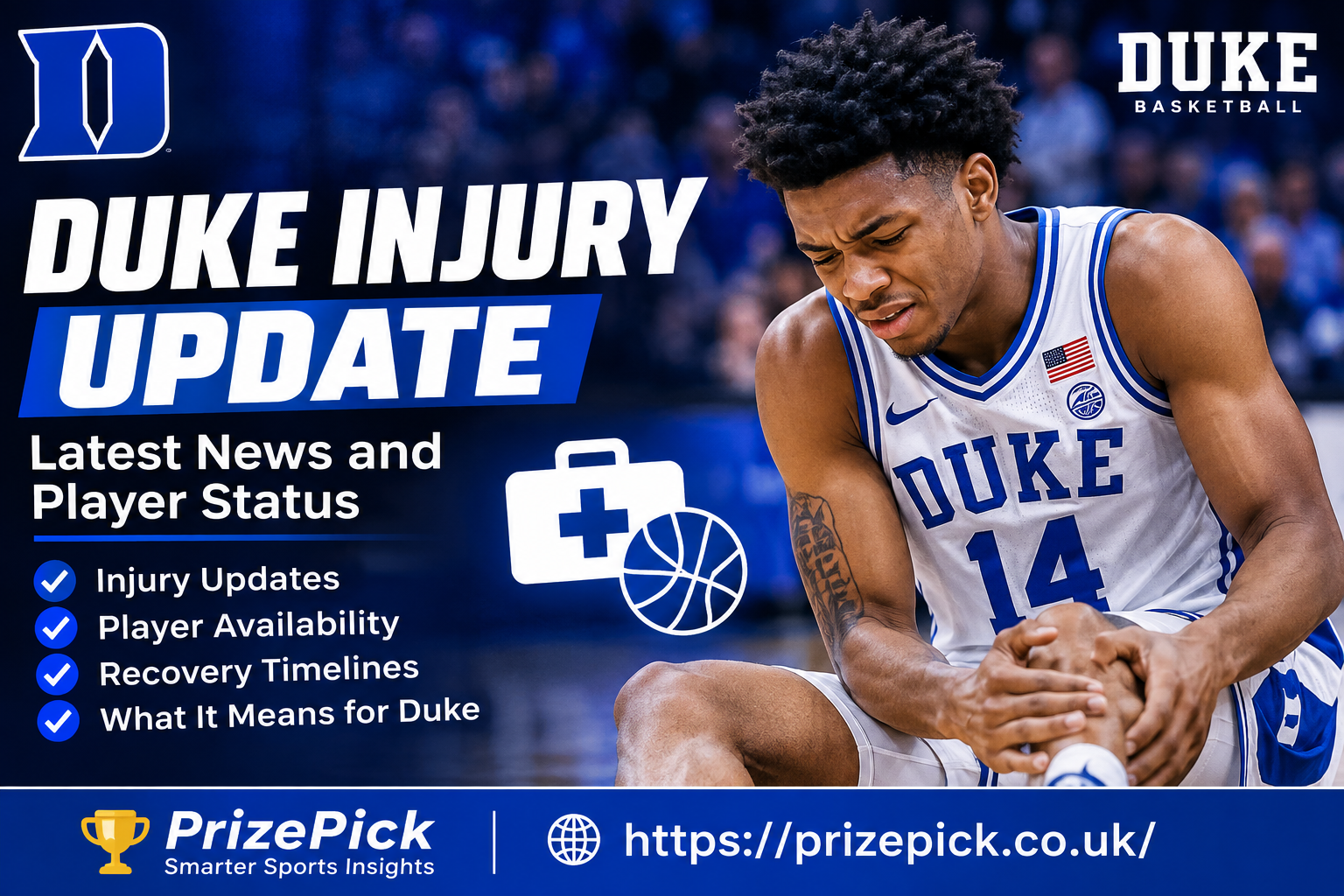
The Duke injury picture can change quickly during a college basketball season, especially when key players are dealing with foot, ankle, knee, or other physical issues. For fans following the Blue Devils, an injury update is about more than simply knowing who is unavailable. It can affect rotations, playing time, team depth, expectations, and Duke’s preparation for upcoming games.
As of August 2026, Duke is between seasons, with the 2025-26 campaign complete and the 2026-27 schedule ahead. Duke’s official men’s basketball schedule lists the season opener against Michigan State on November 10, 2026.
That means injury information should be interpreted differently during the offseason than during an active schedule. A player recovering from an injury may have plenty of time to return before the regular season, while an injury suffered during preseason practices could have a much more immediate effect.
What Is the Latest Duke Injury Situation?
The first thing to understand is that Duke injury news is highly time-sensitive. A status reported during March Madness, for example, should not automatically be treated as the player’s status months later.
Duke’s 2025-26 men’s basketball team has already completed its season. The program’s official schedule now points toward the 2026-27 campaign, beginning with Michigan State on November 10.
Consequently, there is no reason to assume that every player who appeared on an injury report during the previous season remains injured today.
For readers checking Duke’s injury situation, the most useful information includes:
- The player’s current roster status
- The nature of the injury, if officially disclosed
- Whether the player has returned to basketball activities
- Whether participation is limited
- Whether a timetable has been announced
- How much time remains before competitive games begin
This approach prevents old injury reports from being mistaken for current information.
Caleb Foster Injury Update
One of the most notable Duke injury stories from the 2025-26 men’s basketball season involved guard Caleb Foster.
Foster suffered a right foot fracture late in the season. CBS Sports reported that the injury occurred against North Carolina and that Foster was nevertheless able to return during the second weekend of the NCAA Tournament.
The situation was significant because Foster was one of Duke’s most experienced returning guards. During the 2025-26 season, he appeared in 33 games and started 30, averaging 8.3 points, 3.5 rebounds and 2.8 assists, according to his Duke roster profile.
His recovery is therefore worth monitoring as the 2026-27 season approaches. However, an important distinction must be made: a player appearing after an injury does not necessarily mean that every physical issue has disappeared or that there are no restrictions.
The best indication of Foster’s status will come from current team updates, preseason participation and official availability information.
Patrick Ngongba II Injury Update
Patrick Ngongba II was another important Duke player affected by injury during the 2025-26 season.
Ngongba dealt with foot soreness and missed several games heading into the NCAA Tournament. Duke coach Jon Scheyer indicated that Ngongba was unlikely to play in the team’s opening tournament game against Siena, and the NCAA availability report subsequently listed him as out.
The injury was particularly relevant because Ngongba provided size and rim protection. His absence forced Duke to adjust its rotation during a crucial part of the season.
Later reporting indicated that Duke hoped Ngongba could practice and potentially return during the tournament.
For the 2026-27 season, the important question is no longer simply whether he missed games in March. Instead, fans should look for evidence of full participation during offseason and preseason activities.
Why Duke Injury Reports Matter
Injuries can change the way a college basketball team operates almost immediately.
A missing starter can influence:
- Starting lineups – Coaches may need to promote a reserve or change positions.
- Bench minutes – Players who normally have limited roles may suddenly become important contributors.
- Offensive responsibilities – Ball-handling and scoring duties can shift to other guards.
- Defensive assignments – Losing a versatile defender can force different matchups.
- Frontcourt depth – A center or forward injury can significantly alter rebounding and rim protection.
- Game strategy – Coaches may change pace, rotation size or offensive priorities.
For a team with national championship expectations, these changes can matter even when an injury affects only one player.
Duke’s 2026-27 Roster and Injury Context
Duke enters the 2026-27 season with a substantially different roster from the team that finished the previous campaign.
Cameron Boozer and Isaiah Evans departed for the NBA Draft, while several other players also moved on. At the same time, Duke retained players including Caleb Foster, Cayden Boozer, Patrick Ngongba II and Dame Sarr. The Blue Devils also added transfers such as John Blackwell and Drew Scharnowski.
That makes health particularly important.
When a roster contains new players, injuries can affect chemistry as well as availability. A player who misses preseason practices may lose valuable time learning offensive sets, defensive rotations and teammates’ tendencies.
Conversely, a healthy roster can give Jon Scheyer considerably more flexibility when establishing his rotation.
How to Read a Duke Injury Report
Not every injury designation means the same thing.
| Status | What It Usually Means |
|---|---|
| Out | The player is not expected to participate |
| Questionable | The player’s availability has not been determined |
| Probable | The player is expected to participate, subject to final clearance |
| Day-to-day | The player is being evaluated regularly |
| Returned | The player has resumed competition |
| Limited | The player may participate with restrictions |
These labels should always be interpreted in context.
For example, “questionable” before a regular-season game is much more immediate than an offseason report saying that a player is recovering from an earlier injury.
What Fans Should Watch During Preseason
The most useful Duke injury updates will come as preseason practices approach.
Several signals can help determine whether a player is genuinely ready:
Full Practice Participation
A player returning to full team practices is generally a more meaningful development than simply participating in individual workouts.
Contact Work
Basketball injuries can become more difficult to evaluate once players return to contact situations. Participation in live practices can therefore provide important context.
Exhibition or Scrimmage Appearances
Actual game or scrimmage participation can offer another indication of readiness, although coaches may still manage minutes.
Coach Comments
Statements from Jon Scheyer and Duke’s staff can help clarify whether a player is fully available or being brought back gradually.
Official Availability Reports
For games, official availability information is more useful than speculation on social media or message boards.
Why Injury Timelines Should Be Treated Carefully
One of the biggest mistakes when following college basketball injuries is treating an estimated return date as a guarantee.
Recovery can vary considerably depending on:
- Injury type
- Severity
- Rehabilitation progress
- Individual response to treatment
- Conditioning
- Contact tolerance
- Medical clearance
- Coaching decisions
A player can be medically cleared but still have his minutes managed.
Similarly, a player listed as available may not necessarily be ready for a full workload.
For that reason, the most reliable Duke injury coverage should separate confirmed information from expectations.
How Injuries Could Affect Duke’s 2026-27 Season
Duke has enough returning experience and incoming talent to build another competitive roster, but health will remain an important variable.
The Blue Devils are scheduled for several major nonconference tests, including Michigan State, Illinois, Washington State, UConn, Florida, Michigan and Gonzaga.
Those games will provide demanding tests of Duke’s depth.
If the roster remains healthy, Scheyer can distribute minutes according to matchup and performance rather than necessity. If multiple players are unavailable, the coaching staff may need to rely more heavily on younger players or newcomers.
This is especially important early in the season, Duke Injury when rotations are still being established.
Duke Injury News vs. Rumors
Fans will inevitably encounter injury speculation online. Not all of it deserves equal weight.
A useful hierarchy is:
Official Duke announcement → coach or player comments → reputable beat reporting → established sports outlets → social media speculation.
That does not mean every unofficial report is wrong. It simply means readers should distinguish confirmed information from rumors.
An injury report should never turn an unverified social-media claim into a fact.
What Counts as a Meaningful Injury Update?
A meaningful update should answer at least one practical question.
For example:
- Has the player returned to practice?
- Is the player cleared for contact?
- Is the player expected to participate in the next game?
- Has the player’s role changed?
- Has a medical procedure occurred?
- Has a recovery timetable been announced?
- Has the player returned to competitive action?
These details are much more useful than vague statements such as “the player is getting better.”
Frequently Asked Questions
Who is currently injured at Duke?
Current injury status can change quickly, particularly during preseason and the regular season. As of the 2026 offseason, previous-season injuries should not automatically be treated as current absences. Official team updates are the best source for present availability.
What happened to Caleb Foster?
Caleb Foster suffered a right foot fracture during Duke’s 2025-26 season. He later returned during the NCAA Tournament, according to reporting and Duke’s roster information.
What happened to Patrick Ngongba II?
Ngongba dealt with foot soreness late in the 2025-26 season and was ruled out for Duke’s NCAA Tournament opener against Siena. His status subsequently received further attention as Duke progressed through the tournament.
When does Duke’s 2026-27 season begin?
Duke’s official schedule lists Michigan State as its first 2026-27 men’s basketball opponent on November 10, 2026.
Can an injured Duke player return before the season?
Yes. The possibility depends on the injury, rehabilitation progress, medical clearance and coaching decisions. A player injured months before the season has more recovery time than someone hurt shortly before opening night.
Where can fans find reliable Duke injury updates?
The most reliable places are official Duke announcements, official game availability information, coach comments and reputable reporting from established sports journalists.
Why are Duke injuries especially important?
Duke regularly competes with high expectations, so injuries to key players can affect rotations, depth, matchups and overall team performance. The impact depends heavily on the player’s role and the quality of available replacements.
Conclusion
The latest Duke injury picture should always be viewed through the correct timeline. Injuries from the 2025-26 season, including the issues involving Caleb Foster and Patrick Ngongba II, provide important context, but they should not automatically be interpreted as current 2026-27 absences.
With Duke’s next men’s basketball season scheduled to begin in November, preseason health updates will become increasingly important. Fans should pay attention to practice participation, coach comments, official availability reports and evidence of a player’s return to competitive action.
For now, the most responsible way to follow Duke injury news is to separate confirmed information from speculation and focus on the player’s actual availability, recovery progress and expected role. That approach provides a clearer picture of what injuries could mean for the Blue Devils as the 2026-27 season approaches.