
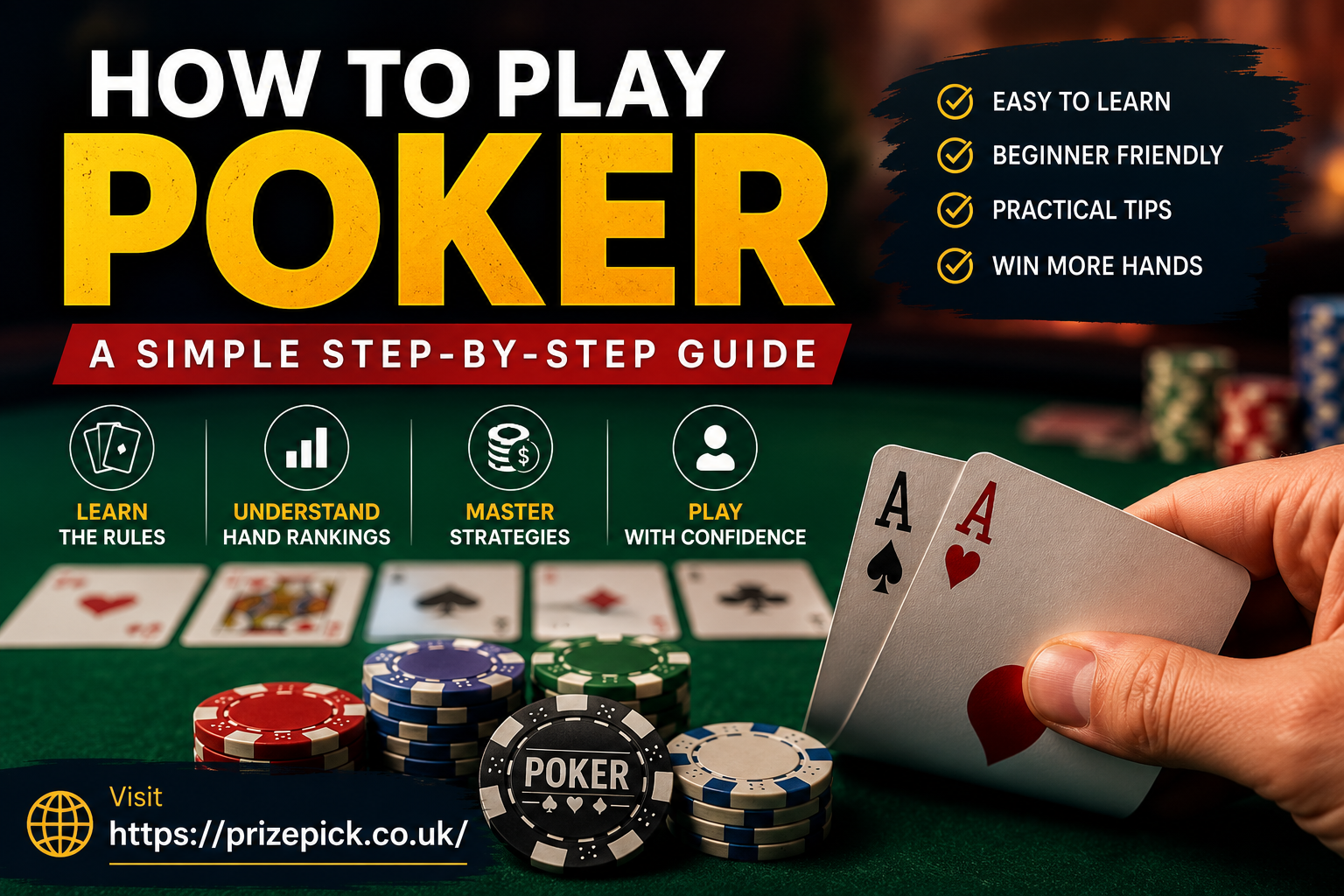
Poker is one of the most popular card games in the world, blending skill, strategy, and a bit of luck. Whether you’ve seen it played in movies, on television, or online, learning how to play poker can open the door to an engaging and mentally stimulating game.
What Is Poker?
Poker is a family of card games where players compete to win chips or money by forming the best hand or convincing others to fold. While there are many variations, most share common elements such as betting rounds, hand rankings, and strategic decision-making.
Popular Types of Poker
- Texas Hold’em – The most widely played version worldwide
- Omaha – Similar to Hold’em but with more hole cards
- Seven-Card Stud – No community cards, more traditional gameplay
For beginners, Texas Hold’em is the best starting point due to its simplicity and popularity.
Poker Hand Rankings Explained
Before you play poker, you must understand how hands are ranked. The strength of your hand determines whether you win or lose.
| Rank | Hand | Description |
|---|---|---|
| 1 | Royal Flush | A, K, Q, J, 10 of the same suit |
| 2 | Straight Flush | Five consecutive cards, same suit |
| 3 | Four of a Kind | Four cards of the same rank |
| 4 | Full House | Three of a kind + a pair |
| 5 | Flush | Five cards of the same suit |
| 6 | Straight | Five consecutive cards |
| 7 | Three of a Kind | Three cards of the same rank |
| 8 | Two Pair | Two different pairs |
| 9 | One Pair | Two cards of the same rank |
| 10 | High Card | Highest card wins if no combination |
Understanding these rankings is crucial because every decision in poker revolves around hand strength.
How to Play Poker: Step-by-Step
Let’s break down how a typical game of Texas Hold’em works.
1. The Setup
- Each player receives two private cards (called hole cards).
- Five community cards are dealt face-up on the table.
- Players use the best combination of five cards from these seven.
2. The Blinds
Before cards are dealt, two players post forced bets:
- Small Blind
- Big Blind
These ensure there is always money in the pot.
3. The Dealing
Each player receives two cards face down.
4. The Betting Rounds
There are four main betting rounds:
Pre-Flop
Players decide whether to call, raise, or fold based on their hole cards.
The Flop
Three community cards are revealed. Players reassess their hands.
The Turn
A fourth community card is dealt. Another round of betting follows.
The River
The fifth and final card is revealed. Final bets are placed.
5. The Showdown
Players reveal their hands, and the best hand wins the pot.
Basic Poker Rules to Remember
- You can fold (quit), call (match a bet), or raise (increase the bet).
- You don’t always need the best hand—bluffing can win pots.
- The goal is to win chips, not just individual hands.
Essential Poker Strategies for Beginners
Learning poker rules is only the beginning. Strategy is what separates beginners from successful players.
Play Strong Starting Hands
Focus on good hands like:
- High pairs (Aces, Kings)
- High cards (Ace-King, Ace-Queen)
Avoid weak hands that are unlikely to improve.
Understand Position
Your position at the table matters:
- Early position: Play cautiously
- Late position: More information, more flexibility
Learn to Fold
One of the most important skills in poker is knowing when to fold. Don’t chase losses or play weak hands out of frustration.
Observe Opponents
Watch how others play:
- Do they bet aggressively?
- Do they fold easily?
This information helps you make better decisions.
Manage Your Bankroll
Set limits for how much you’re willing to risk. Good bankroll management prevents unnecessary losses.
Example: A Simple Poker Hand
Imagine you’re dealt:
- Ace of Spades
- King of Hearts
The flop shows:
- Ace, 7, 2
You now have a strong hand (a pair of Aces).
If your opponent bets aggressively, you might call or raise, depending on your read of their behavior.
This example shows how both hand strength and decision-making matter in poker.
Common Mistakes Beginners Should Avoid
- Playing too many hands
- Ignoring position
- Overvaluing weak hands
- Failing to manage bankroll
- Playing emotionally instead of logically
Avoiding these mistakes can significantly improve your results.
Online Poker vs Live Poker
| Feature | Online Poker | Live Poker |
|---|---|---|
| Speed | Fast | Slower |
| Interaction | Limited | Face-to-face |
| Convenience | Play anytime | Requires location |
| Skill Focus | Math & timing | Reading opponents |
Both formats have their advantages, and many players enjoy a mix of both.
Frequently Asked Questions
1. Is poker a game of luck or skill?
Poker involves both, but skill plays a larger role over time. Experienced players consistently outperform beginners.
2. What is the easiest poker game for beginners?
Texas Hold’em is the easiest and most popular version to learn.
3. How much money do I need to start playing poker?
You can start with very small amounts or even play free games to learn the basics.
4. Can I win without a strong hand?
Yes, bluffing allows you to win even with weaker hands if opponents fold.
5. How long does it take to learn poker?
You can learn the basics in a few hours, but mastering the game takes practice and experience.
6. What is a bluff in poker?
A bluff is when you bet or raise to make others believe you have a stronger hand than you actually do.
7. Should I play poker online or live first?
Online poker is more convenient for beginners, while live poker helps develop social and observation skills.
Conclusion
Poker is more than just a card game—it’s a strategic challenge that rewards patience, observation, and smart decision-making. By learning the rules, understanding hand rankings, and applying basic strategies, you can quickly move from beginner to confident player.
Start with simple games, practice regularly, and focus on improving your decisions rather than chasing wins. With time and experience, poker becomes not only enjoyable but also deeply rewarding.