
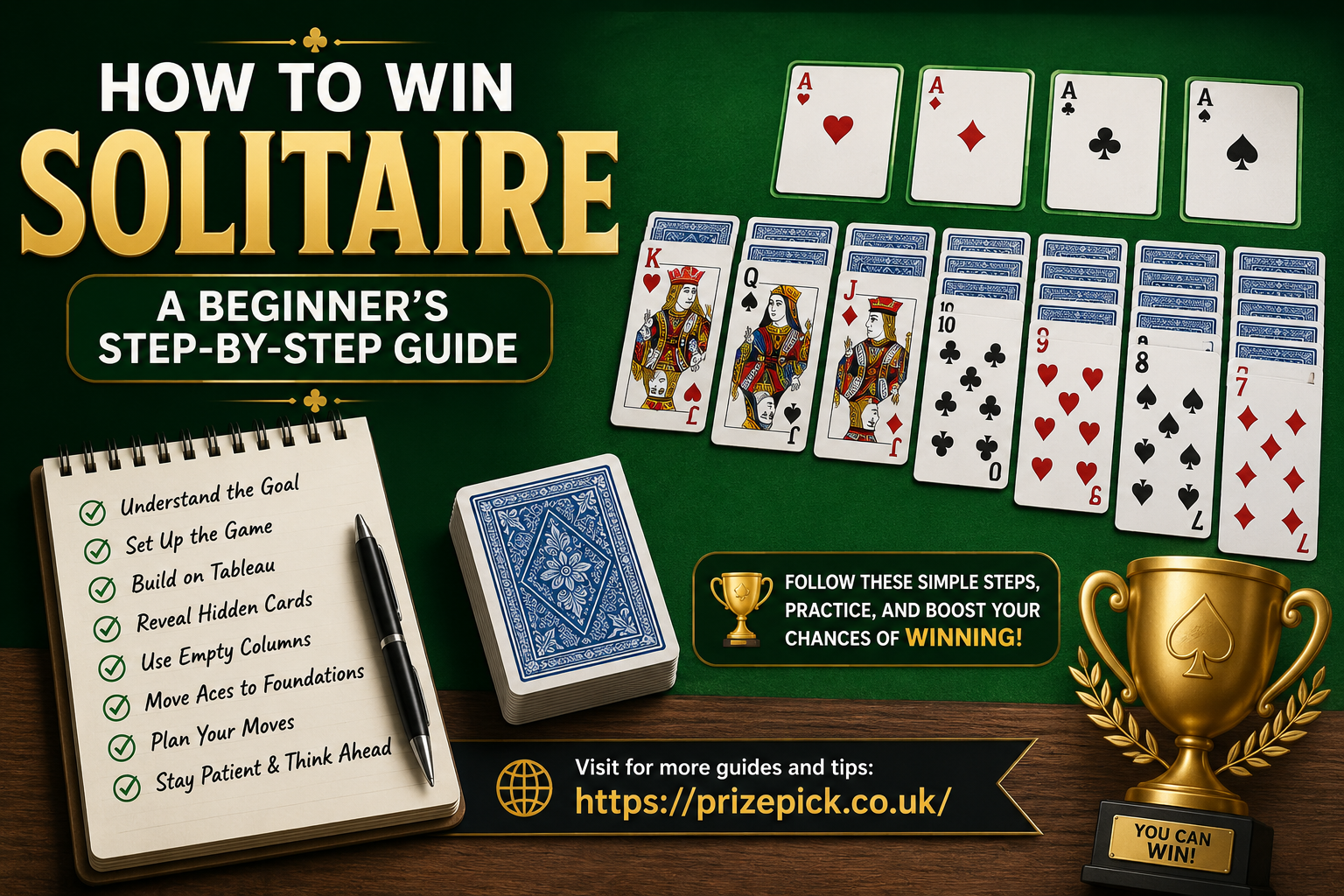
Solitaire is one of the most popular single-player card games in the world, enjoyed by millions of people for relaxation, mental exercise, and entertainment. Although the game looks simple at first, winning consistently requires more than just moving cards randomly. Understanding the rules, planning ahead, and making strategic decisions can significantly improve your results.
If you are searching for how to win solitaire, the key is learning how each move affects future possibilities. A successful player does not only focus on the cards they can move immediately but also thinks several steps ahead.
This beginner-friendly guide explains essential Solitaire strategies, common mistakes to avoid, and practical techniques that can help you make smarter decisions. Whether you play classic Klondike Solitaire on a computer, mobile device, or with a physical deck of cards, these tips will help you approach every game with a stronger strategy.
Understanding Solitaire Before You Try to Win
Before learning how to win solitaire, it is important to understand the basic structure of the game. Most people play the classic version called Klondike Solitaire, which uses a standard 52-card deck.
The goal is to move all cards to the foundation piles, organized by suit from Ace to King.
A typical Solitaire setup includes:
| Area | Purpose |
|---|---|
| Tableau | The main playing area where cards are arranged and moved |
| Foundation | Where cards are placed in ascending order by suit |
| Stock Pile | Remaining face-down cards that can be drawn |
| Waste Pile | Cards drawn from the stock pile |
The challenge comes from managing limited moves while uncovering hidden cards and creating opportunities.
How to Win Solitaire: The Essential Strategy
Winning Solitaire is not only about finding available moves. It is about choosing the moves that create the best future opportunities.
1. Reveal Hidden Cards as Early as Possible
One of the most important strategies in Solitaire is uncovering face-down cards in the tableau.
Face-down cards limit your options because you cannot plan around cards you cannot see. Every time you reveal a hidden card, you increase your possible moves.
Prioritize moves that:
- Turn over face-down cards.
- Open new columns.
- Create more available choices.
- Avoid blocking important cards.
For example, if you can move either a visible card or a stack that reveals a hidden card, the second option is often more valuable.
2. Avoid Moving Cards to the Foundation Too Quickly
Many beginners assume that moving cards to the foundation immediately is always the correct decision. However, this can sometimes hurt your chances.
A low-value card placed in the foundation may be needed temporarily in the tableau to build sequences.
Before moving a card to the foundation, consider:
- Will this card help reveal another hidden card?
- Could this card be useful for building a tableau sequence?
- Will removing it limit future moves?
Good Solitaire players balance progress with flexibility.
3. Build Tableau Columns Strategically
The tableau is where most of the important decisions happen.
When arranging cards, focus on creating useful sequences. Cards must usually be placed in descending order with alternating colors.
For example:
- A black 8 can be placed on a red 9.
- A red Queen can be placed on a black King.
Try to create sequences that allow more movement rather than simply placing cards wherever possible.
A strong tableau gives you:
- More available moves.
- Easier access to hidden cards.
- Better control over the game.
4. Create Empty Columns Carefully
An empty tableau column is one of the most powerful advantages in Solitaire.
Only Kings can be moved into empty spaces, so creating an open column gives you a place to move important stacks.
An empty column can help you:
- Rearrange large groups of cards.
- Free blocked cards.
- Build longer sequences.
However, do not create an empty column without a plan. The goal is not simply to remove cards but to create useful opportunities.
5. Think Several Moves Ahead
A common mistake among beginners is focusing only on the current move.
Before making a decision, ask:
- What happens after this move?
- Will I reveal a new card?
- Am I creating more options or fewer?
- Could this move block another strategy?
Solitaire rewards patience. A move that looks good immediately may create problems later.
6. Manage the Stock Pile Wisely
The stock pile provides additional cards, but using it without planning can make games harder.
Before drawing a new card:
- Check whether existing tableau moves are available.
- Avoid wasting useful cards from the stock pile.
- Remember important cards that appear.
In some versions of Solitaire, the order of stock cards matters greatly. Keeping track of previously revealed cards can help you make better decisions.
Common Solitaire Mistakes That Reduce Your Chances of Winning
Many players lose games because of small strategic errors. Avoiding these mistakes can quickly improve your gameplay.
Moving Any Available Card Immediately
Just because a card can move does not mean it should move.
A legal move is not always a smart move.
Ignoring Face-Down Cards
Leaving hidden cards covered for too long reduces your available choices.
Filling Empty Spaces Too Quickly
An empty column is valuable. Do not use it without considering whether the move improves your position.
Focusing Only on the Foundation
The foundation is the final destination, but the tableau is where you usually win or lose the game.
Making Moves Without a Plan
Random moves often create blocked positions where no useful options remain.
Advanced Tips for Improving Your Solitaire Skills
Once you understand the basics, you can improve further by using more advanced techniques.
Prioritize Mobility Over Immediate Progress
A strong Solitaire position is one where you have many possible moves.
Sometimes keeping cards available is better than completing a foundation pile quickly.
Balance Different Goals
Successful players usually focus on three goals:
- Reveal hidden cards.
- Increase available moves.
- Build foundation piles when safe.
The best moves often accomplish more than one goal at the same time.
Learn From Lost Games
Every Solitaire game provides a learning opportunity.
After losing, think about:
- Which move reduced your options?
- Did you ignore a better choice?
- Did you move cards too quickly?
Recognizing patterns how to win solitaire helps you improve over time.
Beginner vs Advanced Solitaire Approach
| Beginner Approach | Advanced Approach |
|---|---|
| Moves cards whenever possible | Chooses moves based on future possibilities |
| Focuses on the foundation | Balances foundation and tableau needs |
| Uses empty spaces quickly | Creates empty spaces strategically |
| Looks at one move ahead | Plans multiple moves ahead |
Does Solitaire Always Have a Solution?
Not every Solitaire game can be won. Some versions, especially random computer-generated games, may deal combinations that are impossible to complete.
However, using strong strategies increases your chances significantly.
Factors that affect winning include:
- The initial card arrangement.
- The version of Solitaire being played.
- The number of available moves.
- The decisions made during gameplay.
A skilled player cannot win every game, but they can improve their success rate by making better choices.
How Practice Helps You Win More Solitaire Games
Like any strategy game, Solitaire improves with experience.
Regular practice helps you:
- Recognize useful patterns.
- Understand card relationships.
- Make faster decisions.
- Avoid common mistakes.
Playing different versions can also improve your overall understanding of card movement and strategy.
Frequently Asked Questions
What is the best first move in Solitaire?
The best first move is usually one that reveals a hidden card or creates more future options. Avoid choosing moves only because they are immediately available.
Can you win every Solitaire game?
No. Some Solitaire deals are impossible to solve, depending on the card arrangement and game version. Good strategy improves your chances but cannot guarantee every win.
Should I always move Aces to the foundation immediately?
Usually, yes, because Aces start foundation piles. However, always consider whether a card is needed temporarily for another strategic move.
How can beginners get better at Solitaire?
Beginners should focus on revealing hidden cards, planning ahead, avoiding unnecessary moves, and learning from unsuccessful games.
What is the most important Solitaire strategy?
The most important strategy is maintaining flexibility. The more options you create, the better your chances of finding a winning path.
Are online Solitaire games different from traditional Solitaire?
The basic rules are usually the same, but online versions may include different settings, scoring systems, and difficulty levels.
How long does it take to become good at Solitaire?
Improvement depends on practice, but learning basic strategies can make a noticeable difference within a short time. Consistent play helps develop better decision-making skills.
Conclusion
Learning how to win solitaire is about developing patience, planning, and strategic thinking. While the game may seem based on luck, smart decisions can greatly influence your chances of success.
The strongest Solitaire players focus on revealing hidden cards, protecting future options, using empty spaces wisely, and thinking ahead before every move. Beginners can improve quickly by avoiding common mistakes and practicing these strategies consistently.
Whether you play Solitaire for fun, relaxation, or mental challenge, understanding the right techniques can make every game more enjoyable. With the strategies in this guide, you can approach Solitaire with greater confidence and make smarter moves toward victory.